Learning how to start a beauty device brand requires more than attractive packaging and a popular social media launch. It requires evidence, disciplined product development, and a clear understanding of consumer concerns. Dr. Dennis Gross, dermatologist and founder of Dr. Dennis Gross Skincare, has described the opportunity clearly: “The future of skincare is at-home devices.” His view reflects a growing market, but demand alone cannot build a reliable brand.
Start with evidence. Define the specific problem your device solves, such as uneven skin tone, temporary puffiness, or reduced product absorption. Then study existing technologies, customer reviews, treatment habits, and safety complaints. A device that feels warm on the cheek may create a memorable experience, but users also need measurable and responsibly communicated benefits. Avoid exaggerated claims. They can damage trust and create regulatory problems.
Details matter. Select materials that feel safe, durable, and comfortable during repeated use. Work with qualified engineers, dermatology advisors, and experienced manufacturers. Conduct documented testing, including electrical safety, skin compatibility, battery performance, and usability. Requirements differ across markets, so professional regulatory guidance is essential before making medical or therapeutic claims. Build traceability into every production batch.
The commercial plan also needs depth. Calculate manufacturing, certification, shipping, returns, warranty support, and customer education costs. Do not rely only on influencer enthusiasm. Real users may find the device heavy, confusing, or difficult to clean. That feedback is valuable, even when it challenges the original concept. Trust takes time. A successful beauty device brand earns it through transparent evidence, consistent quality, responsive service, and honest communication.
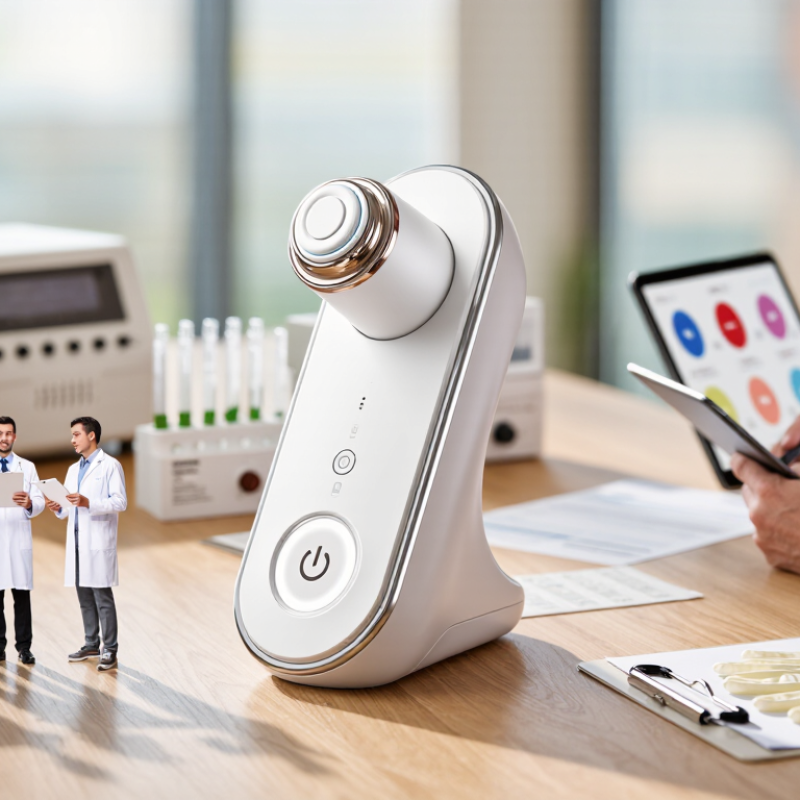
The beauty-devices market reached $35.5 billion in 2023, according to Grand View Research. This figure signals opportunity, not guaranteed demand. Market size includes many categories, regions, and price levels. A new brand must identify one specific customer problem. For example, users may want gentler cleansing, simpler routines, or more consistent at-home care. Study search behavior, competitor reviews, retail pricing, and repeat-purchase patterns. Interviews can reveal frustrations that surveys often miss. Small details matter, such as charging time, grip comfort, storage, and cleaning.
Tips: Define one device, one user, and one measurable outcome. Test a working prototype with real users before ordering large quantities. Record complaints carefully. They often expose better product ideas than compliments. Check electrical safety, material compatibility, labeling, and advertising requirements in every target market. Beauty claims should match available testing evidence. Avoid promising medical results without appropriate authorization and clinical support.
My early planning mistake would be chasing the largest category too quickly. A broad market can hide expensive returns and weak loyalty. Build a modest forecast using realistic conversion rates, warranty costs, shipping damage, and customer support time. Then compare it with manufacturing minimums and cash-flow limits. A beautiful prototype is not proof of product-market fit. It is only a useful question.
Can people use it regularly, safely, and willingly pay for it?
How to Start a Beauty Device Brand Successfully
The global beauty market may reach $590 billion by 2028, according to McKinsey. This scale creates opportunity, but broad positioning can become expensive and unclear. A new beauty device brand should identify one specific customer problem. Consider sensitive skin, short evening routines, or at-home convenience. In customer research, listen for repeated frustrations, not only attractive feature requests. “Too many steps” is a useful signal. “It looks advanced” is not enough. Define the user, concern, routine, and acceptable price before developing hardware. A focused niche makes testing more practical and messaging more credible.
Begin with structured interviews and a small user pilot. Twenty to thirty participants can reveal discomfort, confusing instructions, charging problems, and inconsistent use. Track measurable details, such as session time, repeat usage, skin comfort, and support questions. Do not promise miracles. Every cosmetic claim should match available evidence, product testing, and local advertising rules. Independent safety reviews and clear operating instructions also support customer trust. Keep technical records from the prototype stage. That habit matters.
Any early assumption can be wrong. A device may solve a real concern but still feel inconvenient at night. Revisit the niche after observing actual behavior. Market forecasts indicate potential, not guaranteed demand. Reliable growth usually comes from solving one narrow problem well, then expanding carefully.
The global beauty market was valued at approximately $430 billion in 2022 and is projected to reach approximately $590 billion by 2028. This represents an estimated compound annual growth rate of about 5.4%, highlighting the scale and expansion potential for focused beauty device categories.
Source: McKinsey & Company, global beauty industry forecast.
How to Start a Beauty Device Brand Successfully
Demand validation should begin before product development. Interview at least 20 potential users across different age groups and skin concerns. Ask about routines, frustrations, spending limits, and devices they already use. Avoid asking, “Would you buy this?” People often give polite answers. Ask what they purchased last month and why.
Combine interviews with measurable market data. Study search trends, product reviews, retail prices, return complaints, and repeated customer questions. Look for gaps competitors overlook, such as difficult cleaning, unclear instructions, weak battery life, or uncomfortable designs. A simple landing page can test interest before manufacturing. Track sign-ups, page engagement, and requests for specific features. Numbers are useful, but they need context.
My early research once suggested strong interest in a compact facial device. The survey looked promising, yet most respondents only wanted discounts. That finding changed the product plan. Small tests often reveal uncomfortable truths. Use a limited prototype group, document usage, and record safety concerns carefully. Claims about results should remain evidence-based and comply with applicable product, advertising, privacy, and consumer protection requirements. Independent testing and clear instructions can strengthen credibility. Still, research is never perfect. A narrow sample may hide regional preferences, accessibility needs, or different purchasing habits. Recheck assumptions before committing to inventory.
How to Start a Beauty Device Brand Successfully
Developing a beauty device begins with its intended use, not its appearance. A skin-cooling tool may be cosmetic, while one claiming tissue treatment can become a medical device. That distinction affects FDA classification, CE conformity, clinical evidence, labeling, and post-market surveillance. The FDA reports that Class II devices represent about 43% of regulated devices, often requiring substantial controls or 510(k) clearance. Product claims must match the evidence.
ISO 13485 provides the operational backbone. ISO’s 2022 Survey reported more than 28,000 ISO 13485 certificates worldwide, showing how widely quality systems are adopted. A practical system should control design inputs, supplier qualification, software changes, production records, complaints, and CAPA. Keep traceable records. Test electrical safety, biocompatibility, usability, and foreseeable misuse before commercial release. A beautiful prototype is not proof of safety.
For CE marking, manufacturers need a documented risk-management process, technical documentation, clinical evaluation, and an appropriate conformity route under the EU Medical Device Regulation. The European Commission’s NANDO database listed more than 50 MDR-designated notified bodies in 2024, but availability and device scope still require careful checking. Our early assumption might be wrong: one test report rarely supports every market claim. Regulatory specialists should review the product before launch, especially when energy, heat, light, or app-based controls are involved. Safety must remain measurable.
| Development Stage | Applicable Requirement | Key Compliance Action | Objective Evidence and Records | Release or Compliance Gate |
|---|---|---|---|---|
| 1. Define the intended use | FDA EU MDR | Define the intended user, target population, body area, operating environment, indications, contraindications, and claims. Separate cosmetic claims from claims that may make the product a medical device. | Intended-use statement, product requirements document, claims matrix, labeling concept, and regulatory classification rationale. | Claims are specific, supportable, and consistent with the proposed regulatory pathway. |
| 2. Determine product classification | FDA EU MDR 2017/745 | Determine whether the product is a cosmetic, medical device, or another regulated product in each target market. For a U.S. medical device, assess the applicable FDA classification and whether 510(k), De Novo, or PMA requirements may apply. | Classification memo, predicate-device research where relevant, regulatory correspondence, and documented assumptions. | The regulatory route is documented before final design commitments and marketing claims are approved. |
| 3. Establish the quality system | ISO 13485:2016 FDA QMSR | Build a quality management system covering document control, design controls, supplier controls, production, nonconforming product, corrective and preventive action, complaints, and records. | Quality manual or system overview, controlled procedures, training records, approved forms, internal-audit records, and management-review records. | Responsibilities, procedures, records, and approval authorities are defined and implemented. |
| 4. Perform risk management | ISO 14971 ISO 13485 | Identify hazards associated with energy output, heat, optical radiation, electrical power, software, materials, misuse, cleaning, and foreseeable use errors. Estimate and control risks throughout the product life cycle. | Risk management plan, hazard analysis, risk-control measures, benefit-risk analysis where needed, residual-risk evaluation, and risk-management report. | Risk controls are implemented, verified, and reflected in labeling and user instructions. |
| 5. Design and engineer the product | ISO 13485 IEC Standards | Use controlled design inputs and outputs. For applicable electrical products, evaluate standards such as IEC 60601-1 for basic safety and essential performance, IEC 62366-1 for usability, and relevant optical or battery safety standards. | Design inputs and outputs, drawings, software specifications, component specifications, usability files, cybersecurity considerations, and design-review minutes. | Design outputs are complete, traceable to approved inputs, and suitable for verification. |
| 6. Verify and validate performance | FDA EU MDR ISO 13485 | Verify safety, performance, durability, biocompatibility where patient contact exists, electromagnetic compatibility where applicable, thermal behavior, battery performance, software functionality, and cleaning or reprocessing instructions. | Approved test protocols and reports, laboratory qualifications, acceptance criteria, simulated-use results, stability or durability data, and validation reports. | All critical requirements pass predefined acceptance criteria using documented and controlled methods. |
| 7. Prepare technical documentation | EU MDR FDA | Assemble the technical file or technical documentation, including product description, design information, risk management, verification and validation, labeling, clinical evaluation or performance justification, and post-market plans. | Technical documentation index, declaration-related records, clinical evaluation or literature assessment, label artwork, instructions for use, and traceability records. | Documentation is complete, internally consistent, current, and matched to the final commercial configuration. |
| 8. Complete market access activities | FDA CE Marking | Follow the applicable U.S. submission, registration, listing, and establishment obligations. For the European Union, apply the appropriate conformity-assessment procedure and involve a notified body when required by the device class or applicable route. | Submission records, clearance or authorization correspondence where applicable, EU Declaration of Conformity, notified-body certificate where required, and registration records. | Required market-access steps are completed before placing the product on the relevant market. |
| 9. Control suppliers and production | ISO 13485 FDA QMSR | Qualify suppliers according to risk, define purchasing specifications, control critical components, validate special processes, maintain device-history records, and ensure production units match the approved design. | Supplier evaluations, quality agreements, incoming-inspection records, process-validation reports, batch or device-history records, calibration records, and final-release checklists. | Each released unit or batch meets approved specifications and has complete traceability. |
| 10. Monitor the product after launch | FDA EU MDR ISO 13485 | Operate complaint handling, adverse-event assessment, trend analysis, vigilance reporting where required, corrective and preventive action, field-action procedures, and periodic review of safety and performance data. | Complaint files, service records, return analysis, trend reports, CAPA records, vigilance assessments, post-market surveillance reports, and management reviews. | Safety signals are investigated promptly and changes are assessed for regulatory and design impact. |
Launch with one specific user problem, not a crowded product catalog. A customer should understand the device within five seconds. Show its size, texture, setup, and daily routine through real demonstrations.
Track landing-page conversion, add-to-cart rate, checkout completion, and customer acquisition cost.
McKinsey’s 2023 State of Beauty report valued the global beauty market at $427 billion in 2022. It projects nearly $580 billion by 2027. The report also expects online channels to exceed 30% of beauty sales.
Measure more than revenue. Grand View Research estimates the global beauty devices market reached about $35.7 billion in 2023. It forecasts continued growth through 2030. Use this momentum carefully.
Monitor activation rates
Product usage after 30 days
Refund reasons
Support tickets
Repeat purchases for compatible accessories
A high conversion rate can hide weak satisfaction. My forecast might still be wrong. Customer behavior is less tidy than a spreadsheet.
Scale only when the numbers support reliable service. Compare contribution margin after shipping, returns, payment fees, and customer support. Build cohorts by acquisition channel and device type.
Watch whether paid traffic produces loyal users or one-time buyers. Keep a small test budget for new messages, prices, and tutorials.
If retention falls, pause expansion and inspect the customer journey. A beautiful launch is not proof of product-market fit.
Steady learning is.
Begin before product development. Interview at least 20 potential users with different ages and skin concerns.
Ask about routines, frustrations, spending limits, and devices used recently. Ask what they bought last month and why.
People may offer polite answers. Recent purchasing behavior usually gives stronger evidence.
Study search trends, reviews, retail prices, returns, and repeated questions. Look for cleaning, battery, instruction, or comfort problems.
Yes. Track sign-ups, page engagement, and feature requests. Numbers need context.
Use a limited group and document real usage. Record setup difficulties, comfort issues, and safety concerns carefully.
Monitor conversion, cart additions, completed checkouts, acquisition cost, refunds, support tickets, and 30-day usage.
Scale when margins remain healthy after shipping, returns, payment fees, and support. Check whether customers return or buy once.
A narrow sample may hide regional habits or accessibility needs. My forecast may still be wrong.
Pause expansion and inspect the customer journey. Review tutorials, setup, support, pricing, and product expectations. Keep learning.
How to start a beauty device brand successfully begins with understanding the market opportunity and choosing a focused niche. With the beauty-devices market reaching approximately $35.5 billion in 2023 and the global beauty market projected to approach $590 billion by 2028, entrepreneurs should identify specific consumer needs rather than compete broadly. Consumer interviews, surveys, product testing, and competitive market analysis can help validate demand, clarify pricing expectations, and reveal opportunities for meaningful differentiation.
Product safety and regulatory planning are equally important. Devices should be designed, tested, documented, and manufactured according to applicable requirements, including FDA considerations, CE marking obligations, and ISO 13485 quality-management principles where relevant. After launch, performance should be evaluated through e-commerce metrics such as conversion rate, customer acquisition cost, repeat purchases, reviews, refund rates, and customer lifetime value. Continuous measurement and careful scaling can support sustainable growth while maintaining product quality and consumer trust.

TK Beauty