China’s beauty market is moving toward measurable efficacy, personalized routines, and technology-assisted care. McKinsey’s China beauty market research highlights stronger consumer interest in premium products, scientific claims, and digital shopping experiences. Euromonitor International also identifies China as a highly competitive market, where innovation and trust increasingly influence purchase decisions.
That makes the question “how to combine skincare products with beauty devices” more important than choosing the most expensive gadget. Cleansing devices may suit a simple gel cleanser, while LED masks require clean, dry skin before application. Microcurrent tools usually need a compatible water-based conductive gel, not a rich facial oil. Small details matter. A slippery serum can reduce contact and weaken device control.
Top China beauty devices often include LED masks, microcurrent tools, ultrasonic spatulas, and radio-frequency-inspired home systems. However, their evidence, safety instructions, and regulatory status can differ significantly. The National Medical Products Administration (NMPA) distinguishes medical devices from ordinary beauty and personal-care products, so consumers should verify product registration, labeling, and intended use. Marketing language is not clinical proof.
The American Academy of Dermatology recommends introducing active skincare products gradually and stopping when irritation appears. That advice remains relevant when devices increase product penetration or skin stimulation. A practical routine might use a gentle cleanser, one device, and a fragrance-free moisturizer. Keep it simple.
There is room for doubt. Not every glowing result comes from the device alone; lighting, hydration, and consistent use can mislead evaluations. This guide compares device functions, ingredient compatibility, evidence quality, and realistic expectations, helping readers build safer routines rather than chase dramatic promises.
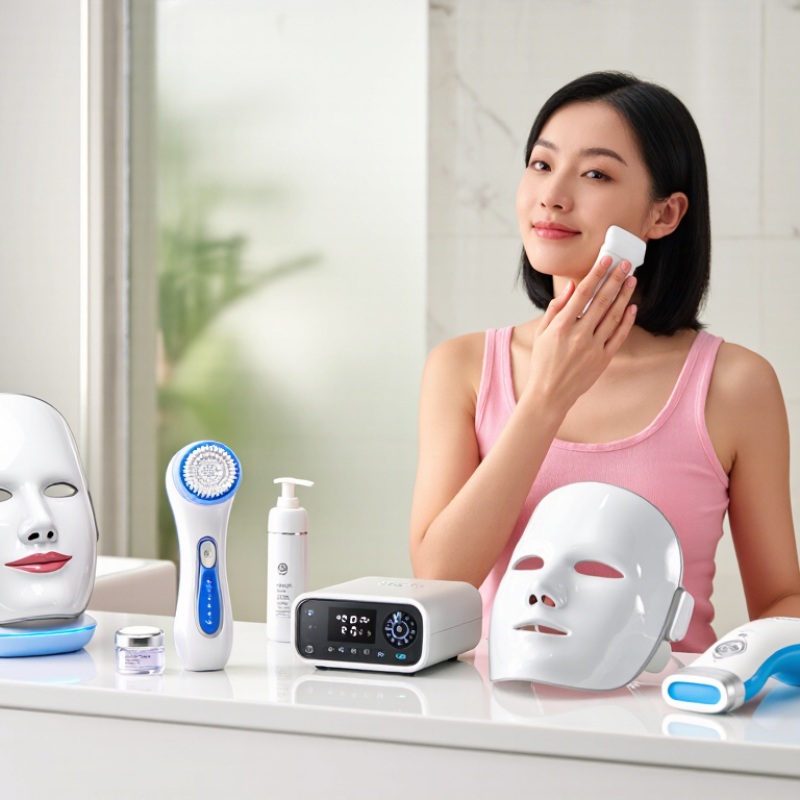
Define Skin Goals Through Evidence Levels and Fitzpatrick Skin Types
How to Combine Skincare With Top China Beauty Devices?
China’s beauty market reached about RMB478 billion in 2020, according to McKinsey’s 2021 China beauty report. McKinsey projected roughly RMB631 billion by 2025. Growth increases device choices, but popularity is not proof. Define the skin goal first: hydration, uneven tone, texture, or firmness. Then grade the evidence. Level one includes systematic reviews and randomized trials. Level two includes controlled clinical studies. Level three relies on expert consensus. Testimonials sit lower.
Fitzpatrick skin types I through VI describe sun-response patterns, not complete skin health. Types I and II may burn easily. Types V and VI carry greater risk of post-inflammatory hyperpigmentation after excessive heat, irritation, or light exposure. Use lower intensity, shorter sessions, and careful monitoring. Start gently. Patch test skincare separately. For LED, microcurrent, or radiofrequency devices, follow the manufacturer’s safety instructions and avoid treating active dermatitis, broken skin, or unexplained lesions.
Pair evidence with a simple routine. Cleanse, use one proven topical, apply the device, then moisturize. Do not stack acids, retinoids, heat, and light on the same night. A 2024 NIQ China beauty report highlighted efficacy and ingredient transparency as major consumer concerns. That expectation is reasonable, but home-device evidence remains uneven. Marketing language can sound more precise than the studies behind it. Keep dated photographs, record settings, and review results after eight to twelve weeks. Your protocol may need revision. Mine would, too.
How to Combine Skincare With Top China Beauty Devices?
Define your skin goals through evidence levels and Fitzpatrick skin types. The chart uses an evidence-index score from 0 to 5, where 0 means little or inconsistent clinical evidence and 5 means comparatively stronger and more consistent evidence in peer-reviewed research. Scores are directional, not treatment-effect percentages.
Fitzpatrick guidance
Types I–II generally have lower melanin-related risk but may be more prone to visible redness. Types III–VI require greater caution with heat, intense light and aggressive exfoliation because post-inflammatory hyperpigmentation can be more likely.
How to combine devices
Start with the clearest goal. LED has the most practical overlap with acne and inflammatory skincare routines. Radiofrequency and microcurrent are commonly positioned for cosmetic firmness, while ultrasound-based delivery has more limited and variable clinical support.
Safety note
Home IPL is highly device- and skin-type-dependent. It is generally more challenging for Fitzpatrick IV–VI because of the greater risk of burns and pigment changes. Follow the specific device instructions and avoid combining heat or light treatments with irritating active ingredients on the same day.
Evidence basis: a directional synthesis of published clinical research on home-use LED photobiomodulation, radiofrequency, microcurrent, ultrasound-assisted delivery and IPL. Fitzpatrick skin types describe response to ultraviolet exposure and do not replace professional assessment. Individual results vary by device parameters, treatment frequency, skin condition and concurrent skincare.
Match LED Wavelengths: 630–660 nm Red and 810–850 nm Near-Infrared
How to Combine Skincare With Top China Beauty Devices?
Red light therapy works best when the wavelength matches your skin goal. Choose 630–660 nm red light for surface-level support and a more even-looking complexion. Near-infrared light, usually 810–850 nm, reaches deeper tissue and may support recovery after daily stress. These ranges are widely discussed in photobiomodulation research, but device quality still matters. Wavelength accuracy, light output, treatment distance, and eye protection can change the experience.
Use the device on clean, dry skin before applying creams or serums. This keeps the light from being blocked by heavy oils or opaque ingredients. After treatment, apply a simple hydrating serum, then moisturizer. Red light may pair comfortably with soothing ingredients such as hyaluronic acid or panthenol. Avoid using strong exfoliating acids or retinoids immediately beforehand if your skin feels sensitive. I have found that consistency is more useful than intensity. More sessions do not always mean better results.
Tips: Check the instruction manual for treatment time and distance. Start with a short session twice or three times weekly. Keep your eyes protected when recommended. Photograph your skin under the same lighting, because memory can be misleading. Stop if you notice persistent redness, heat, or discomfort. Patch-test new skincare products separately. Some results remain subtle, and that is easy to overlook. Always choose devices with clear technical specifications and reliable safety information.
Set Device Frequency Using Manufacturer Protocols and 3–5 Weekly Sessions
Combining skincare with top China beauty devices requires more than adding another step to a routine. The manufacturer’s protocol should guide frequency, intensity, and product pairing. Some devices suit three sessions weekly, while others permit five. Never assume daily use is better. Overuse may leave skin tight, red, or unusually sensitive.
In practice, I would begin with three short sessions each week. Clean, dry skin gives the device stable contact. Apply only the conductive gel or serum recommended in the instructions. Avoid strong acids, retinoids, or fragranced products during the same session unless a qualified professional approves them. Keep movements slow, especially around the nose and jawline. Five minutes can be enough.
Watch your skin the next morning. Persistent warmth, swelling, burning, or peeling means the schedule needs adjustment. Pause when necessary. A simple log can record dates, settings, products, and reactions. This makes the routine easier to evaluate. Patch testing remains useful, although it cannot predict every response. People with implanted electronic devices, active skin conditions, or recent procedures should seek medical guidance before use.
The plan is not flawless. Skin changes with weather, stress, and medication. A fixed three-to-five-session target may therefore need flexibility. Follow the manual, reduce frequency when irritation appears, and treat comfort as practical evidence, not a challenge to overcome.
How to Combine Skincare With Top China Beauty Devices? - Set Device Frequency Using Manufacturer Protocols and 3–5 Weekly Sessions
| Device category |
Typical manufacturer protocol |
Recommended weekly frequency |
Skincare pairing |
Best application order |
Key safety and usage notes |
| LED red or near-infrared light |
Usually 10–20 minutes per session, using the distance and exposure time specified in the device manual. |
3–5 sessions |
Gentle hydrating products such as glycerin, hyaluronic acid, panthenol, or a simple moisturizer. |
Cleanse and dry the skin → use LED → apply serum and moisturizer. |
Wear the recommended eye protection. Review photosensitizing medicines and conditions with a healthcare professional before use. |
| Microcurrent facial device |
Often 5–10 minutes per session with slow, upward gliding movements and a conductive medium. |
3–5 sessions |
Water-based conductive gel or a fragrance-free hydrating gel; avoid oils during treatment because they may reduce conductivity. |
Cleanse → apply conductive gel → use the device → remove residue if needed → moisturize. |
Do not use over broken or irritated skin. Follow medical-device restrictions for pacemakers, implanted electronic devices, pregnancy, or seizure disorders. |
| Home radio-frequency (RF) |
Commonly 10–15 minutes per session, with continuous movement and a conductive gel when required by the manual. |
1–3 sessions; use 3 sessions only when the manual permits it |
A water-based conductive gel; use calming and moisturizing products after treatment. |
Cleanse → apply the required gel → use RF → remove gel → moisturize. |
Avoid the eyelids, thyroid area, open wounds, and active inflammation. Do not use over implanted metal or electronic devices unless cleared by a qualified clinician. |
| Ultrasonic skin spatula |
Usually 5–10 minutes per session on thoroughly damp skin, with the blade kept at the manufacturer-recommended angle. |
1–2 sessions |
Plain water or a compatible water-based mist; follow with a gentle hydrating serum. |
Cleanse → keep skin wet → use the spatula lightly → rinse if necessary → moisturize. |
Avoid pressing hard or repeatedly treating the same area. Do not use on active infections, open lesions, or severely irritated skin. |
| Warm massage or heated facial device |
Often 5–10 minutes per session at a comfortable temperature; the device should remain moving rather than staying in one spot. |
3–5 sessions |
A lightweight, non-irritating moisturizer or water-based serum that provides slip. |
Cleanse → apply a compatible serum or gel → use the device → finish with moisturizer. |
Stop if there is burning, persistent redness, or discomfort. Use extra caution with rosacea, heat sensitivity, or recently exfoliated skin. |
| Cleansing brush or sonic cleansing device |
Commonly 1–2 minutes per use, beginning with the lowest intensity and softest compatible brush head. |
2–3 sessions; reduce frequency for dry or sensitive skin |
A mild, non-abrasive, low-fragrance cleanser; avoid combining it with scrubs or leave-on exfoliating acids in the same routine. |
Wet face → apply cleanser → use the device briefly → rinse → moisturize. |
Do not use on active dermatitis, sunburn, open wounds, or inflamed acne. Clean and dry the brush head after every use. |
|
Planning rule: Start with the lowest effective frequency, allow at least 24 hours between unfamiliar treatments, and increase toward 3–5 weekly sessions only when the device manual and skin tolerance support it. Patch-test new skincare products, use broad-spectrum sunscreen during the day, and follow the specific instructions supplied with each device.
|
Verify NMPA Registration, IEC 62471 Safety, and SPF 30+ Daily Protection
How to Combine Skincare With Top China Beauty Devices?
A safe routine begins with verification, not excitement. For devices sold in China, check the NMPA registration or filing information where applicable. Match the model, manufacturer, intended use, and registration details carefully. A product page alone is not enough. Keep a screenshot of the official record and the instruction manual.
Light-based devices also need photobiological safety evidence. Look for testing that references IEC 62471 and explains the device’s risk group, wavelength, and eye-protection guidance. IEC 62471 is not a magic safety stamp. It supports evaluation, but correct use still matters. Wear the recommended eye protection. Stop if you feel burning, unusual redness, or vision changes. Seek qualified medical advice when symptoms continue.
Use the device on clean, dry skin unless the instructions permit a conductive gel or serum. Avoid combining it with strong exfoliating acids or retinoids during your first sessions. Skin can react unpredictably. Apply a broad-spectrum SPF 30 or higher every morning, even on cloudy days. Reapply during outdoor exposure. I once underestimated how quickly treated skin could become tight and reactive. That mistake made me reduce session frequency and simplify my products. Patch testing helps, but it cannot predict every reaction. A calm routine is often more reliable than an aggressive one.
Conclusion
Combining skincare with beauty devices starts with clear, evidence-based goals and an understanding of your Fitzpatrick skin type. Consider whether you are targeting inflammation, uneven tone, fine lines, or texture, then choose a device and routine suited to your needs. Red light in the 630–660 nm range and near-infrared light around 810–850 nm are commonly selected for different skin-support purposes, but results depend on consistent, appropriate use. Learning how to combine skincare products with beauty devices also means applying ingredients carefully: separate or adjust retinoids and exfoliating acids if sensitivity develops, while vitamin C may be used according to product and device guidance.
Follow the manufacturer’s protocol rather than assuming more frequent sessions are better; many routines use approximately three to five sessions weekly. Before use, verify relevant NMPA registration information and IEC 62471 photobiological safety compliance. Daily broad-spectrum SPF 30 or higher remains essential, especially when addressing pigmentation or using potentially sensitizing ingredients.

 TK Beauty