Choosing top beauty electronics from China can give brands access to varied designs, flexible production, and competitive pricing. Yet a polished catalogue photo cannot reveal a device’s balance, noise, or performance after repeated use. Small details matter. A hair dryer that feels too heavy, or a facial brush with unclear speed settings, may disappoint customers even when its specifications look impressive.
A careful buying process starts with the intended user and application. Decide whether you need styling tools, cleansing devices, or other personal care products, then compare measurable features such as power, materials, controls, and included accessories. The question of how to select personal care electronics for beauty applications also involves checking sample quality, packaging, production capacity, and communication. Ask suppliers for clear product specifications and relevant quality documentation, and compare those records with the sample in your hands. A sample is useful, but it cannot guarantee every unit will match. That limitation deserves attention.
This guide explains how to assess suppliers, product fit, and practical evidence before placing an order. It also considers questions buyers may overlook, including replacement parts, instruction quality, and how defects are handled. No supplier should be chosen on price alone. The strongest decision comes from balancing performance, consistency, service, and realistic expectations. Some trade-offs remain; a feature-rich device may not suit every market or customer. Check the details, ask direct questions, and document what the supplier promises.
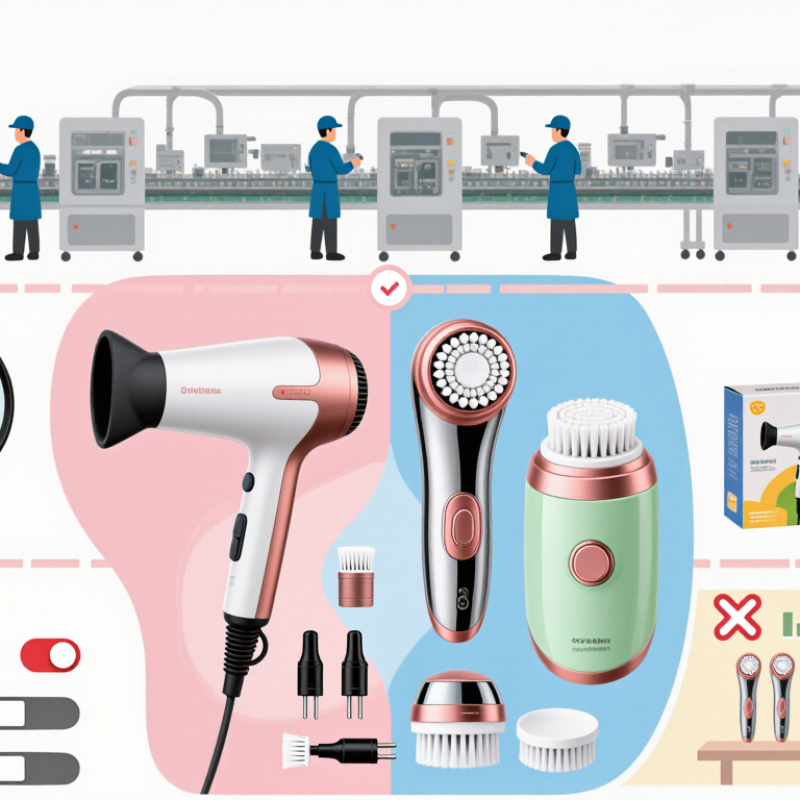
Beauty electronics are powered tools designed for skin, hair, or nail care. Their categories describe intended use, but the boundaries can be blurry. A facial cleansing device, for example, may use vibration or rotating brushes; a skin-care device may use light, heat, or electrical stimulation. Other common groups include hair-removal tools, acne-care devices, hair stylers, and manicure equipment. Small differences matter. A heated tool needs stable temperature control, while a cleansing device needs a comfortable contact surface and a clear cleaning routine.
Grand View Research’s Beauty Devices Market Size, Share & Trends Analysis Report estimated the global market at USD 49.1 billion in 2022 and projected a 10.8% compound annual growth rate from 2023 to 2030. This broad estimate covers multiple device types, so it should not be treated as evidence that every category is growing at the same pace. When comparing products from China, buyers can match the device category to measurable details: treatment area, operating modes, battery capacity, temperature range, and water-resistance rating. Ask suppliers how these figures were tested. The category labels can be messy, and I would not choose a device from its product name alone. A clear manual and consistent test records tell more than glossy claims.
Defining product, market, and performance requirements makes supplier comparisons more useful. Start with the treatment you want the device to support, such as facial cleansing, hair styling, or skin massage. Specify who will use it, how often, and in what setting. A compact travel device has different needs from a salon unit used throughout the day. Note practical details, too: preferred materials, grip size, cleaning routine, packaging, and target price. Small details matter. A common mistake is choosing features before confirming what customers actually value.
Tips: Write a one-page brief before requesting quotations. List essential features separately from optional ones. Include target markets, expected order volumes, and any required language or packaging details. Ask suppliers to explain how they verify product performance and consistency. Test the routine.
Translate expectations into measurable checks. For example, record operating time, charging time, noise level, heat output, or water resistance where relevant. Set clear acceptance ranges rather than relying on descriptions like “powerful” or “long-lasting.” Request samples and evaluate them under realistic conditions: use the device for repeated sessions, inspect controls with damp hands, and check whether cleaning is straightforward. Compare sample results with the agreed specification. Even a tidy brief can miss something; revise it after testing, and document changes before production. Performance depends on the device and how people use it.
Choosing a Chinese beauty-electronics manufacturer takes more than reviewing a polished catalogue. Ask how quality is controlled from incoming components to finished devices. A capable supplier should explain inspection steps, production records, and how defects are handled. Request sample records for a recent production batch, with sensitive details removed. Check whether component lots can be traced to finished units. Small details matter: cable strain tests, charging stability, and consistent temperature readings. Ask to see the actual test setup, not only a certificate. Paperwork can look impressive.
A quality system should also show how the factory corrects recurring problems. Ask for an example of a defect investigation and the change made afterward. The explanation should be specific, with dates, measurements, and follow-up checks. Independent audits may add useful evidence, but an audit report is only a snapshot. It cannot guarantee every shipment will meet expectations. Compare supplier claims with your own sample testing, using agreed criteria for performance, labeling, packaging, and durability. Keep written records of approvals and revisions. One awkward but valuable question is: what happens when a test fails? Hesitation is not proof of poor quality, yet vague answers deserve closer review. Be careful not to confuse a tidy showroom with dependable production.
Evaluating Chinese Manufacturers and Their Quality Systems
This illustrative 100-point supplier assessment framework allocates more points to process controls, final product testing, and corrective-action systems. It is a proposed evaluation model, not survey data or a ranking of manufacturers. Verify each item through records, site audits, and product testing.
When choosing beauty electronics from China, treat safety documents as evidence to verify, not decoration. Ask for certificates and full test reports covering the exact model, adapter, plug, and intended sales market. Similar model names do not prove that a report applies. Check the issuing body, report date, product identifiers, and test scope.
For powered devices, relevant checks may include electrical safety, insulation, leakage current, temperature rise, electromagnetic compatibility, and battery protection. Requirements vary by product and destination, so confirm current rules with a qualified local compliance professional.
Paper is not proof.
Tips: Compare the report’s model number with the product label and packaging. Confirm laboratory accreditation and report authenticity directly with the issuing lab where possible. Keep copies of correspondence.
Request a production sample and compare it with the tested configuration before placing a large order. During normal operation, look for clear instructions, secure connectors, stable temperature, and consistent shutoff behavior. These checks do not replace laboratory testing.
A neat document set can still leave uncertainty if the factory changes a component after testing. Ask how changes are controlled, and request updated evidence when parts or designs change. Small details matter.
A beauty device can look impressive in a catalog and feel quite different in your hand. Compare samples under the same conditions, not just side by side on a desk. Check the grip, button response, cable fit, noise, and how quickly the unit warms during a short session. Small details matter. Record the settings and test time for each sample, then repeat the test if results seem inconsistent. One sample is not proof of steady production quality; ask how the supplier checks later batches.
Compare costs using the same written specifications. Include sample fees, tooling, packaging, shipping, inspection, spare parts, and minimum order quantities. A low unit price may hide costly changes or weaker accessories. Ask for a dated quotation and confirm what happens if a component changes. That is not enough. Request relevant test records and clear product specifications, and check that they match the exact model you sampled. Documents can be incomplete, so verify details rather than relying on a file name.
Support deserves its own comparison. Ask how quickly technical questions are answered, whether manuals and troubleshooting steps are available, and how replacement parts are handled. Send one specific question about a feature or fault and note whether the reply is clear and practical. A friendly sales message is useful, but it does not show how an issue will be managed months later. I would also keep written answers with the sample notes; it feels fussy, yet memory gets unreliable when several suppliers are involved.
Specify the treatment, user, setting, and expected use frequency. Note grip size, materials, cleaning needs, packaging, and target price. Small details matter.
Write a brief separating essential features from optional ones. Set measurable ranges for run time, charging, noise, heat, or water resistance.
Use each device for repeated sessions under similar conditions. Check button response, grip, cable fit, noise, and cleaning. Damp hands can reveal problems.
Compare the report’s model number with the device label and packaging. Check the report date, issuing body, and test scope. Paper is not proof.
Ask for full reports covering the exact model, adapter, plug, and intended market. Relevant checks may include insulation, temperature, and battery protection.
No. Ask how later batches are checked, and compare a production sample with the tested configuration. Component changes can create uncertainty.
Use the same written specifications. Include samples, tooling, packaging, shipping, inspection, spare parts, and minimum order quantities. A low price can hide extra costs.
Ask about technical replies, manuals, troubleshooting, and replacement parts. Send one specific question and keep the answer with your sample notes. I may be overthinking it, but memory gets unreliable.
Choosing top beauty electronics from China begins with understanding the main product categories and matching them to your intended use, target customers, and market. Define the features, performance levels, materials, and user experience you need before comparing suppliers. A clear product brief helps you assess whether a manufacturer can meet your expectations and support your plans for consistent production.
When evaluating manufacturers, review their quality-control systems, communication, and ability to provide relevant documentation. Check applicable safety standards, certifications, and product-testing records for the markets where the electronics will be sold. Request samples to assess performance, finish, and ease of use, then compare pricing, production timelines, warranty terms, and after-sales support. A careful process for how to select personal care electronics for beauty applications can help you make a well-informed choice based on product suitability, quality, and long-term supplier reliability.

TK Beauty